Changelog/Vitals 1.12
Vitals 1.12: Vitals in the notch

Quick answer
Vitals 1.12 puts Vitals in the notch. Connect Claude Code, Codex or Gemini CLI, and when an agent wants to run a command or edit a file, the request comes out of the notch with Allow and Deny, beside the name of the project that is asking. Alerts that need you come there too, such as the Mac running out of memory, with the app to quit one click away. On a Mac without a notch, both appear under Vitals in the menu bar.
Answer your coding agents from the notch
A coding agent stops and waits whenever it needs your permission, and you find out when you next look at its terminal. With Vitals connected, the request comes to you: a black panel grows out of the notch with the agent, the project, and the command or file it is asking about.
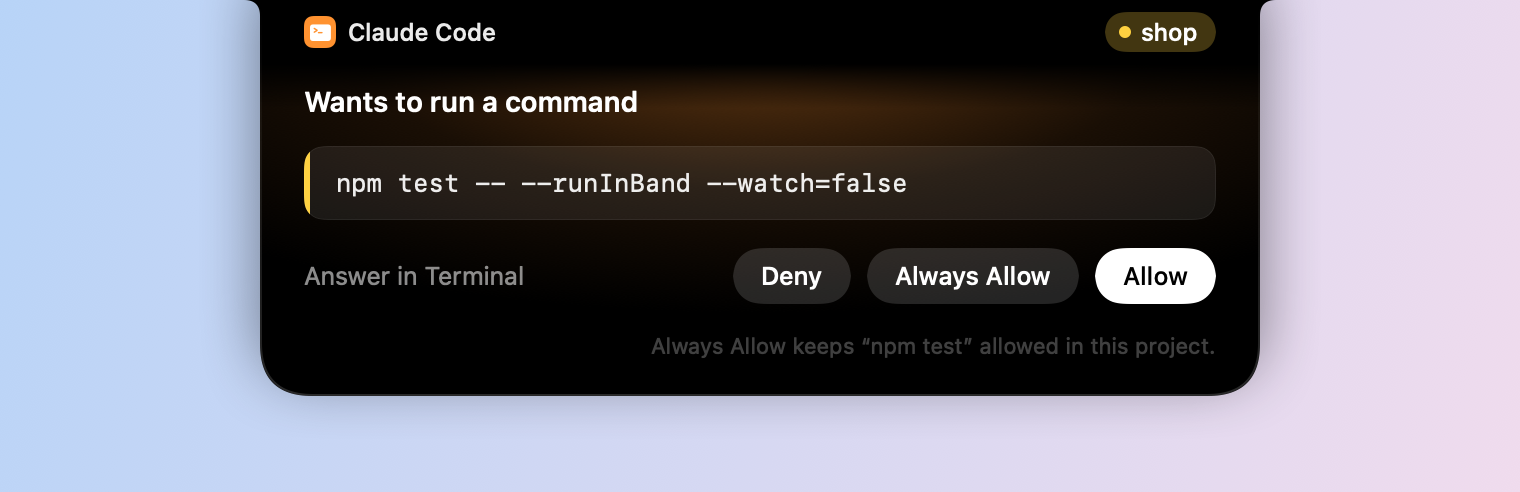
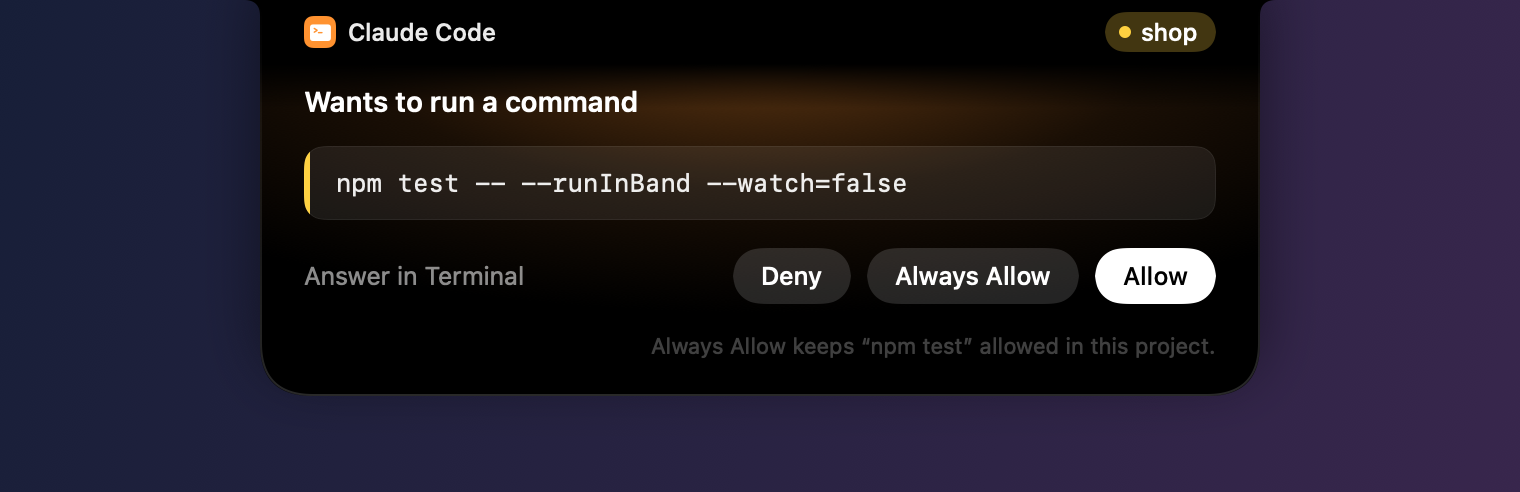
- Allow lets it go on.
- Always Allow keeps the rule Claude Code itself suggests, such as allowing
npm testin this project. The line under the buttons says what it keeps. - Deny refuses it.
- Answer in Terminal leaves the request to the agent’s own window and brings that window forward.
The panel never takes the keyboard from the app you are in, and it is left out of screenshots and screen sharing.
Connect an agent
- 01 Open Settings → Integrations and find Coding Agents.
- 02 Click Connect… beside Claude Code, Codex or Gemini CLI. Vitals shows the hooks it will add to the agent’s settings file.
- 03 Click Connect. Sessions that are already running pick the hooks up when they start again.
Vitals shows the hooks before it adds them, and keeps a copy of the settings file from before, ending in .before-vitals. Disconnect takes the hooks out again and leaves the file as it was.
Several sessions at once
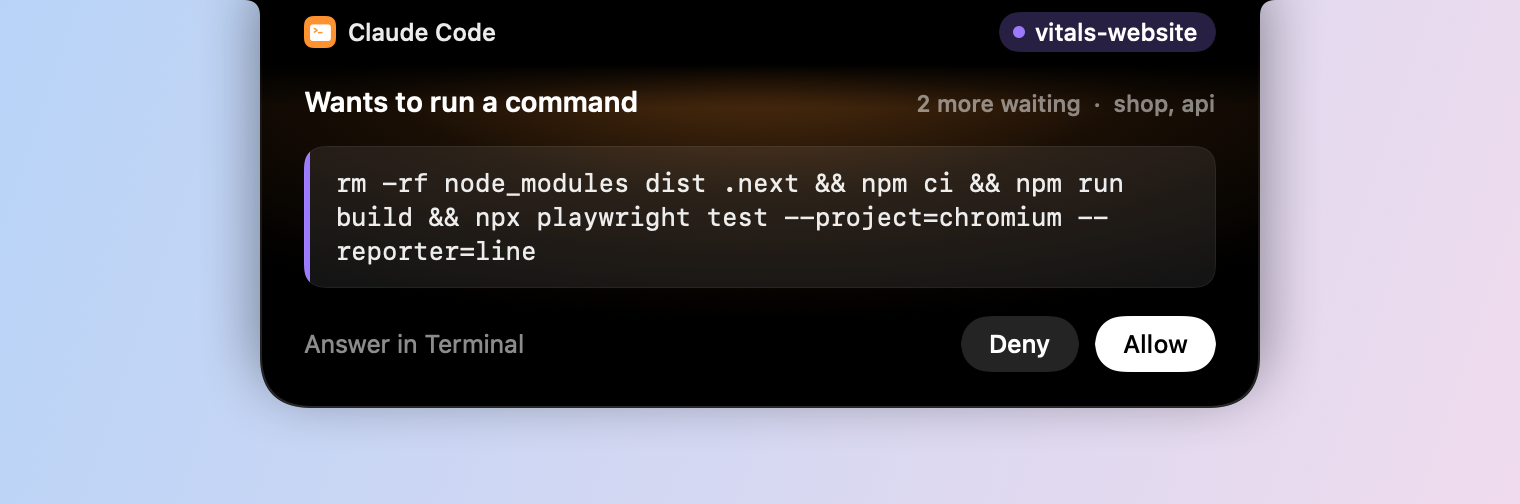
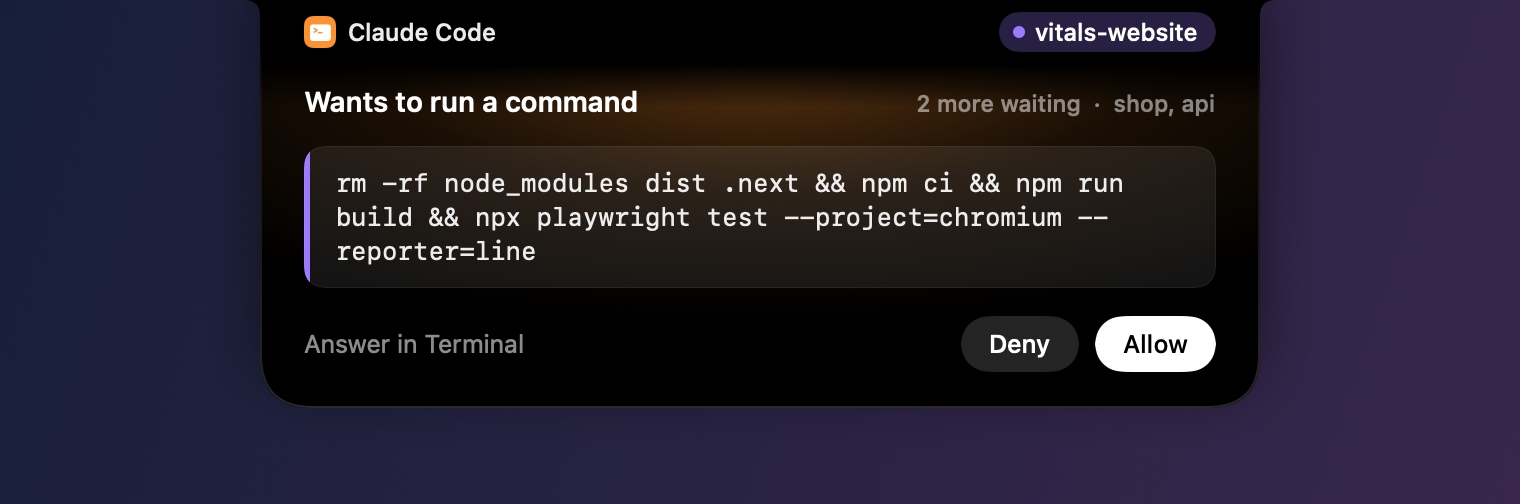
With three sessions asking at once, it is easy to allow the wrong one. Each project has a colour of its own, on its name beside the notch and down the edge of the command. After the headline, the notch says how many more are waiting and from which projects.
The answers take no click for the first moment a request is on screen, so a second click meant for the last request does not answer the next one. A long project name widens the panel, and a very long one has its folder written in full under the header.
Questions, answered with a click
When Claude Code asks you a question with choices, the choices appear in the notch, each with what it means. A click answers a question that takes one choice. One that takes several has Next, and Done on the last.
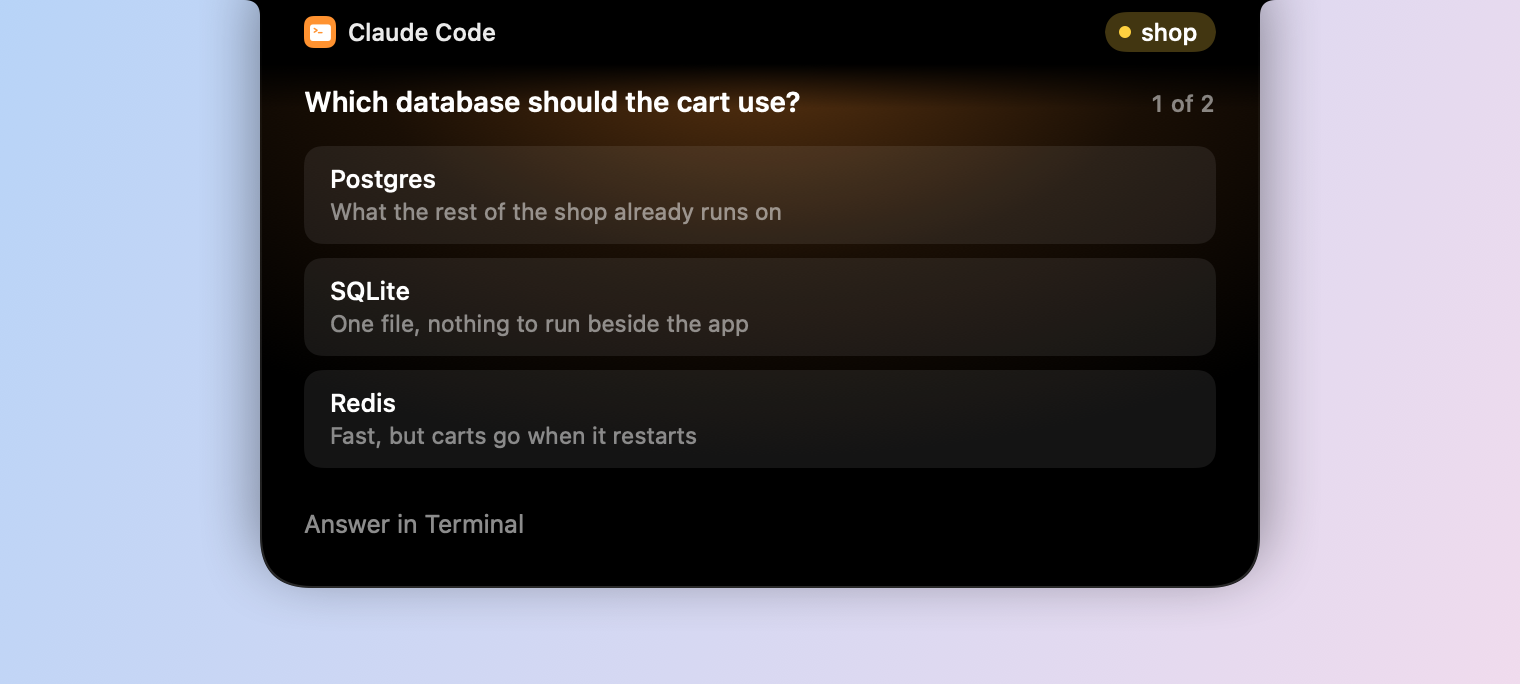
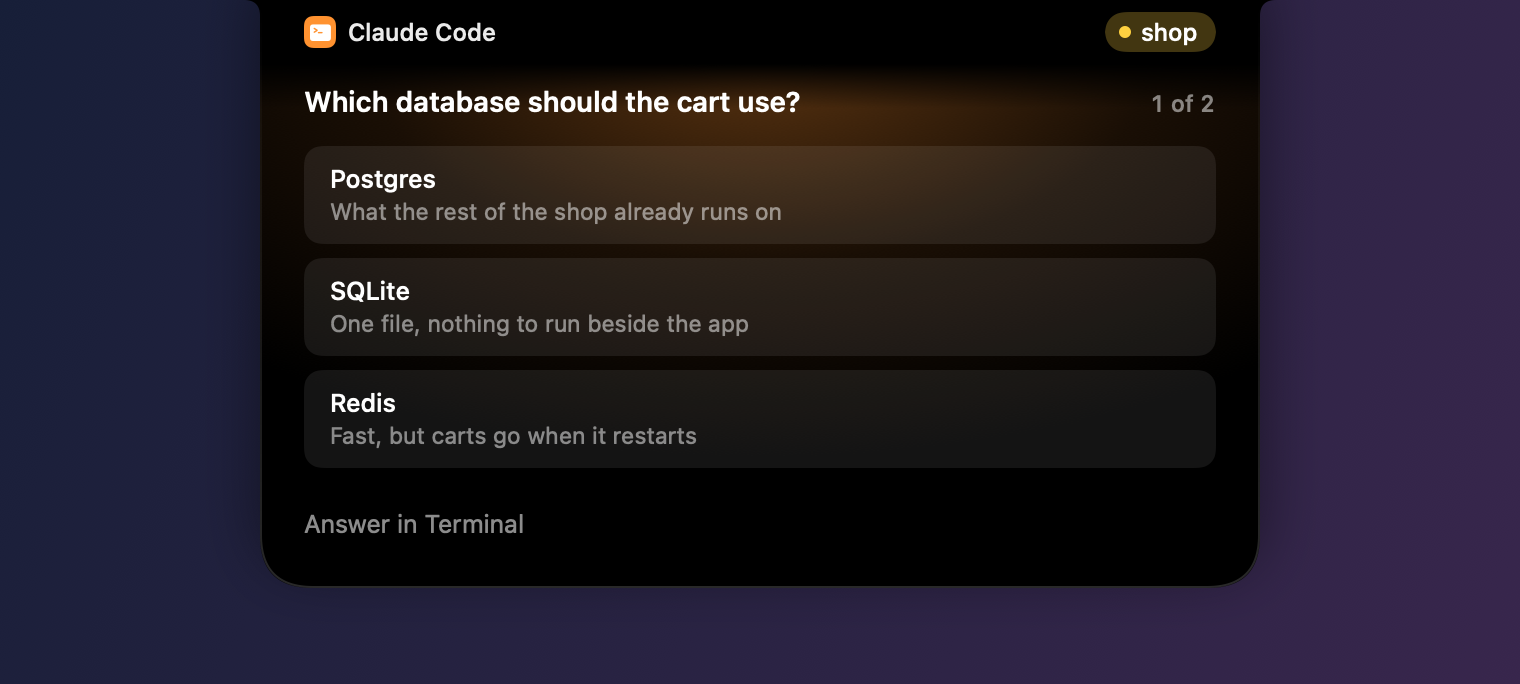
To type an answer of your own, choose Answer in Terminal.
Codex and Gemini CLI
A request from Codex has Allow and Deny. Gemini CLI can only be answered in its own window, so the notch tells you it is waiting, with the command, and Show Terminal brings forward the app it runs in.
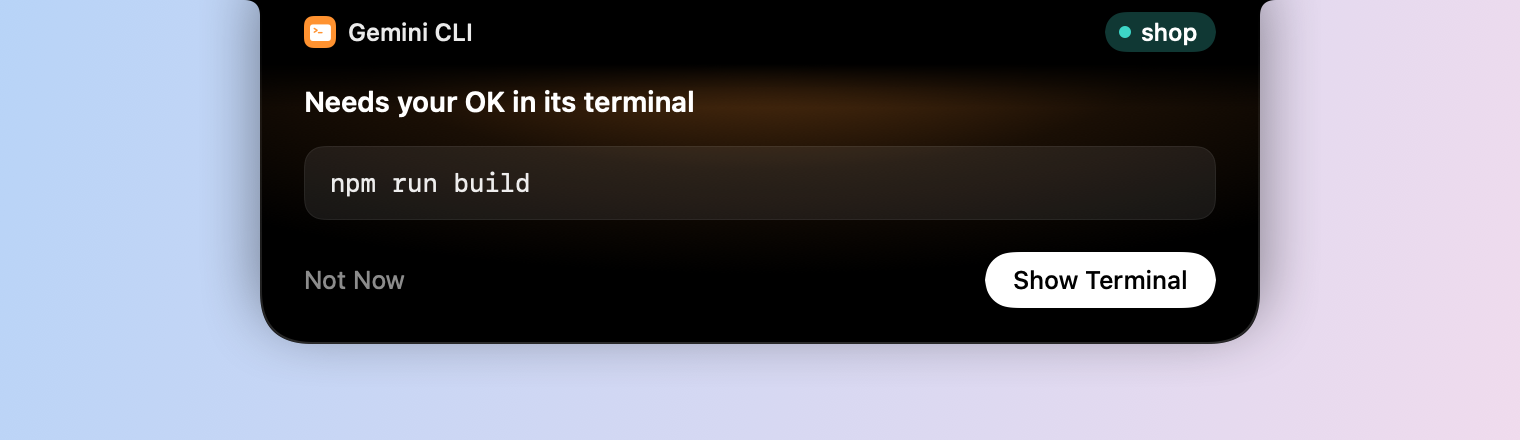
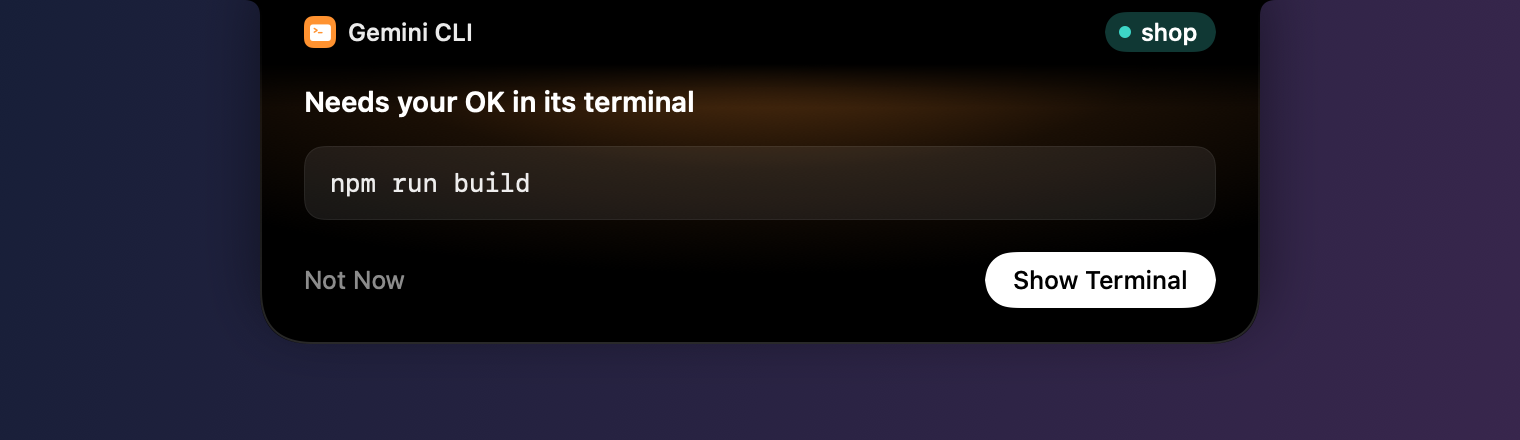
Codex runs new hooks only once you trust them: in Codex, open Settings → Hooks, or type /hooks.
What each agent is doing, and when it is done
With an agent connected, the Agents tab and the dropdown say what each session is doing, in the agent’s own words: Running npm test, Thinking, Needs your OK, Asked you a question or Stopped at a usage limit.
A turn that took 30 seconds or more ends with a line in the notch: the agent, the project, how long it took, and any dev servers it left running with the memory they hold.


Both can be turned off under Coding Agents, with Ask for Permissions in the Notch and Show When a Turn Finishes.
Alerts that need you, with what to do about them
An insight used to wait under Worth a Look, or arrive as a notification that was easy to miss. One that needs you now comes out of the notch: the Mac running out of memory or running hot, an app over a limit you set, an app that keeps growing in memory or keeps the CPU busy, dev servers left idle, and a stuck command.
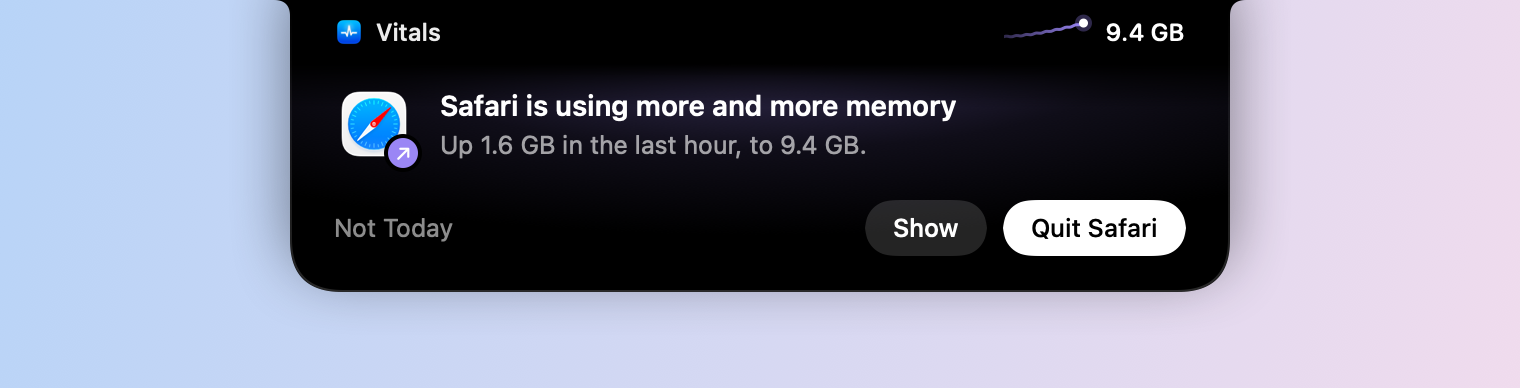
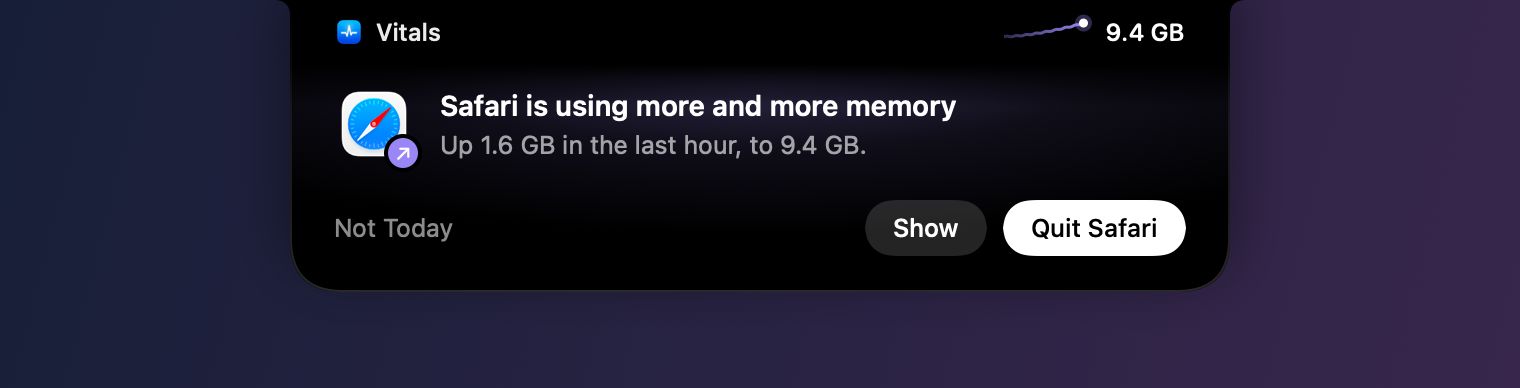
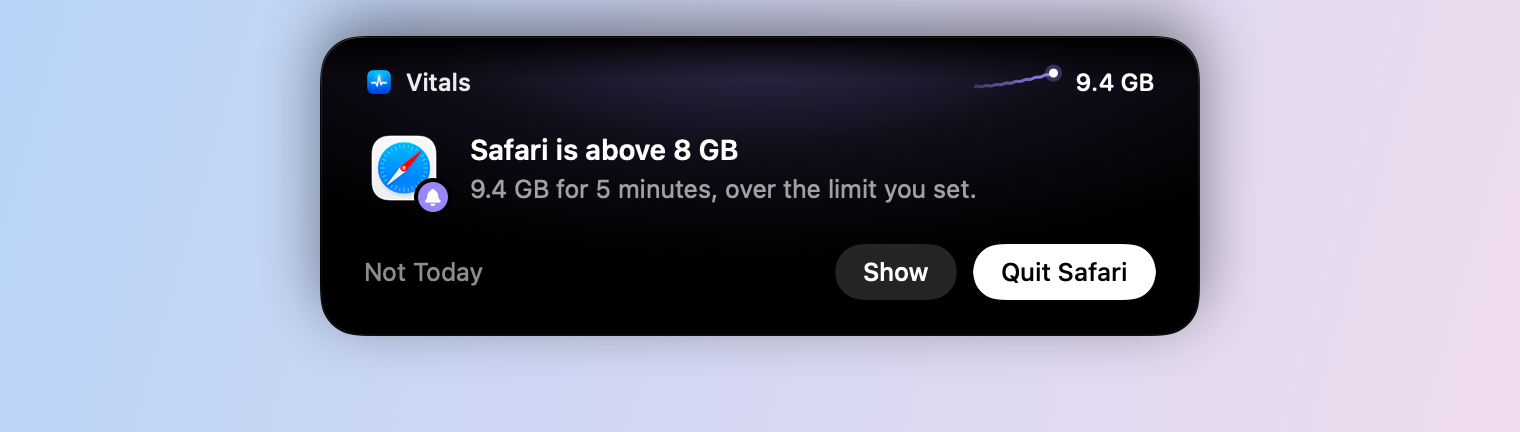
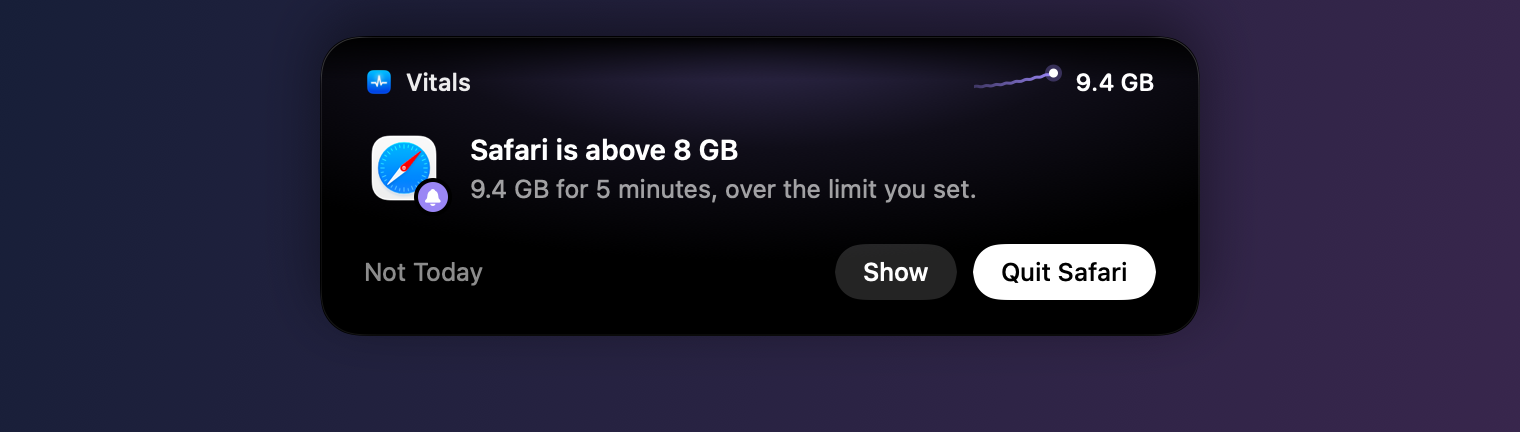
Beside the notch is the number the alert is about, as it is now, after a short line of how it got there.
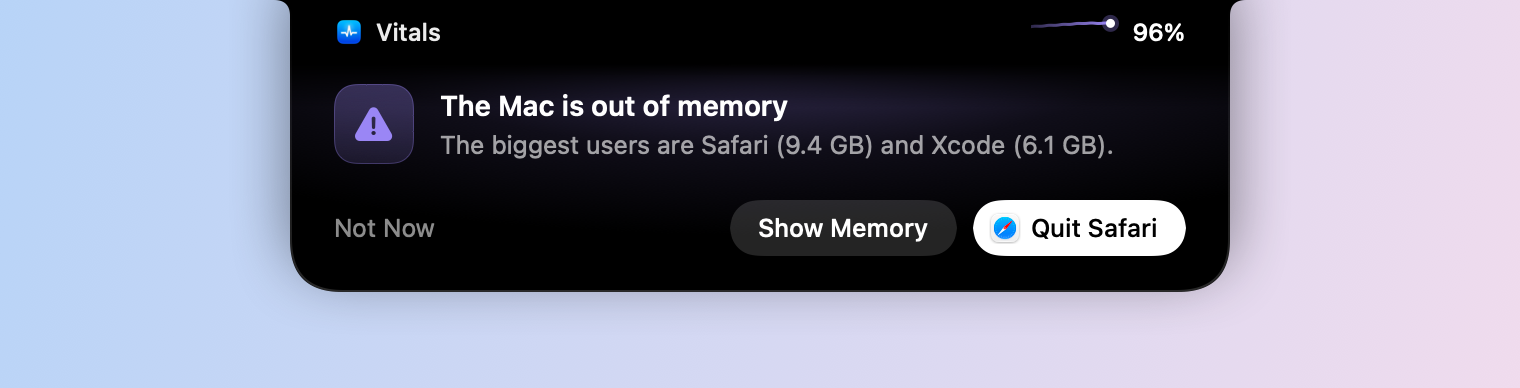
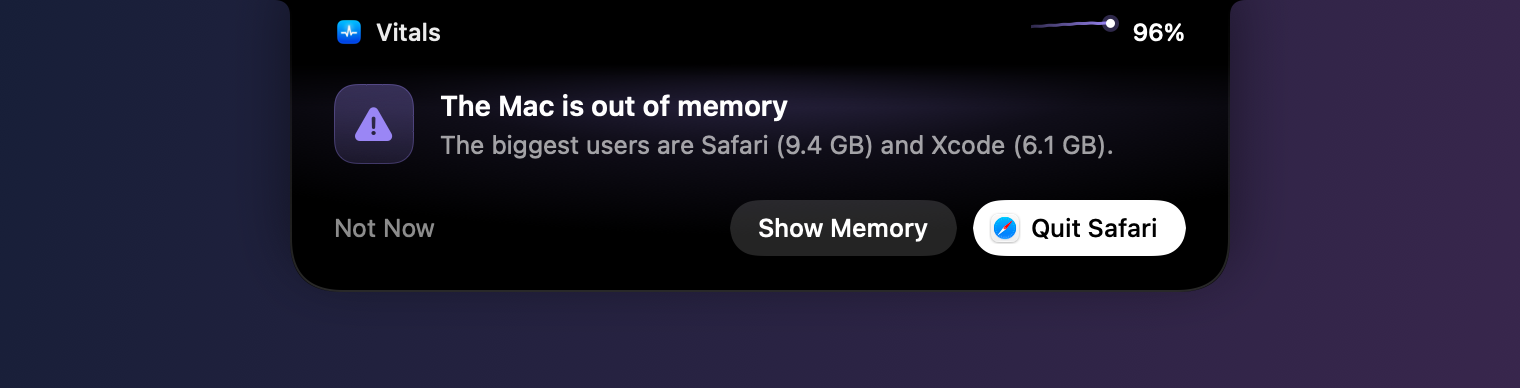
- Quit quits the app the way ⌘Q does, so it can ask you to save. When the Mac is out of memory, it offers the app using the most.
- Not Today mutes alerts about that app until tomorrow.
- Show opens Vitals on the right tab, with the app open.
An alert goes after nine seconds unless the pointer is on it. At most one comes every two minutes, except for running out of memory and running hot, and none comes over an app in full screen.
An alert about one app
An alert about an app shows the app’s icon with the kind of alert on its corner, and the app’s own number beside the notch: its memory, or its share of the CPU.
Choose where insights appear
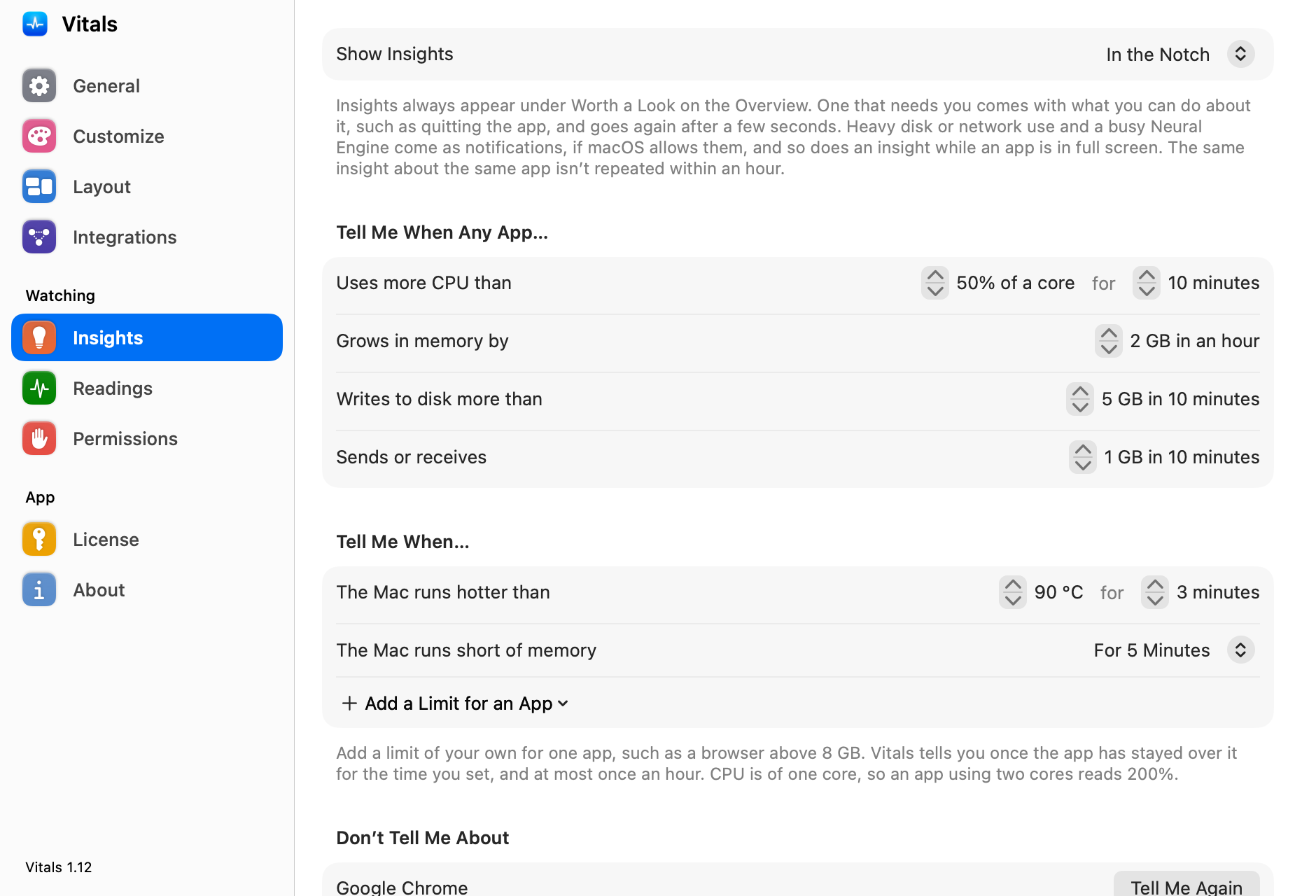
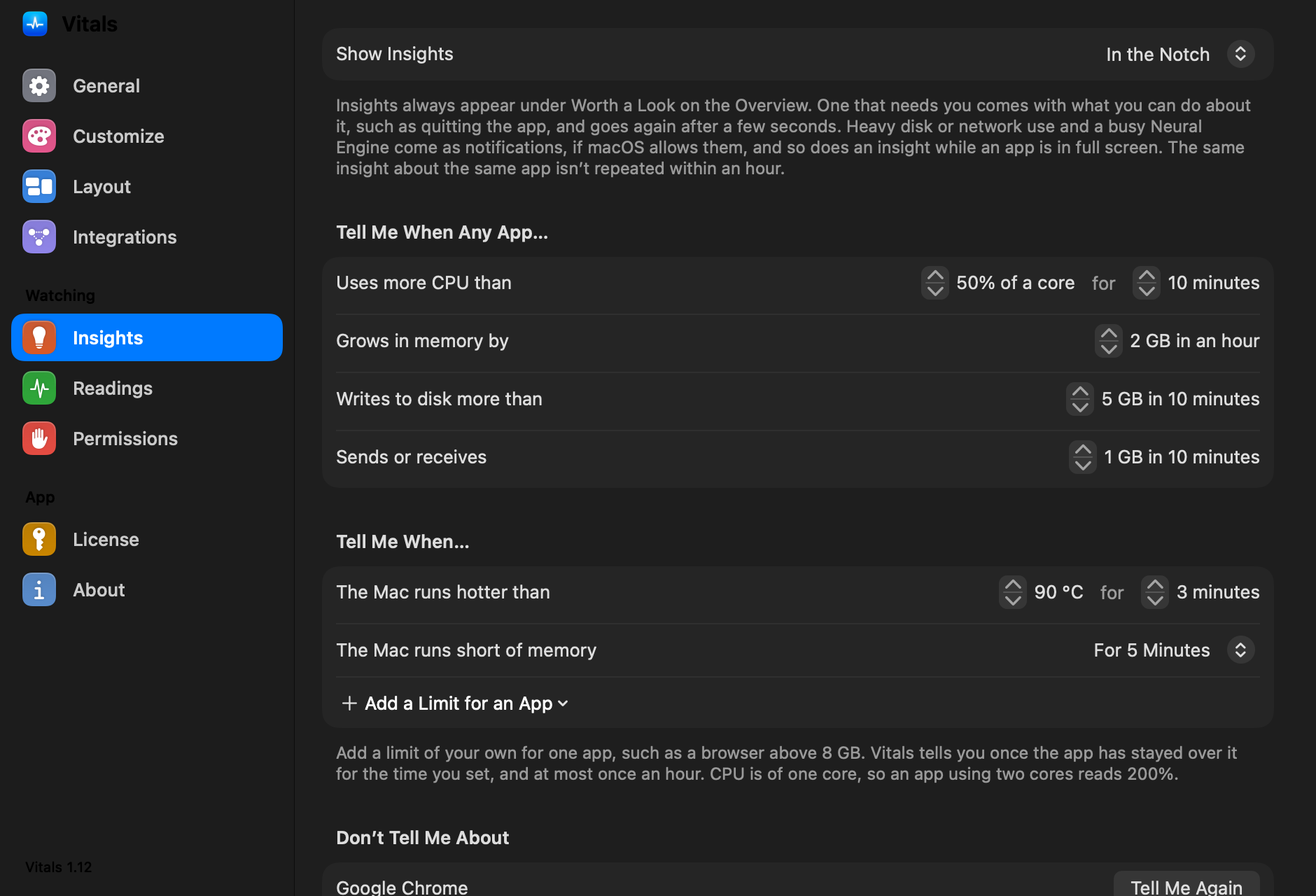
Settings → Insights has Show Insights where Send Notifications was, with three choices: In the Notch, As Notifications and Only in Vitals. If you had turned notifications off, you start on Only in Vitals. Everyone else starts on the notch.
Heavy disk or network use and a busy Neural Engine are worth reading but rarely worth stopping for, so they come as notifications, where macOS allows them.
On a Mac without a notch
On a Mac without a notch, or a MacBook with its lid closed, requests and alerts are a card that comes down from under Vitals in the menu bar, on the screen the menu bar item is on.
Questions people ask
Is 1.12 a free update?
Yes. In Vitals, choose Check for Updates. It is part of every license.
Does Vitals read my prompts or my code?
No. A hook hands Vitals the event, the session, its folder and, for a permission, the command or file it is for. Vitals keeps none of your prompts or the agent’s answers, and sends nothing anywhere.
What does connecting change on my Mac?
It adds one hook for each of the agent’s events to its settings file, after anything already there: ~/.claude/settings.json for Claude Code, ~/.codex/hooks.json for Codex and ~/.gemini/settings.json for Gemini CLI. A copy of the file from before is kept beside it, and Disconnect takes the hooks out.
What happens when Vitals is not running?
Each hook returns at once and says nothing, so the agent asks in its terminal as it did before. An agent is never held up.
Can I keep alerts out of the notch?
Yes. In Settings → Insights, set Show Insights to As Notifications or Only in Vitals. Agents’ requests have a switch of their own under Settings → Integrations → Coding Agents.
Does it work on a Mac without a notch?
Yes. Requests and alerts appear as a card under Vitals in the menu bar.
Why does Gemini CLI have no Allow button?
Gemini CLI’s hooks can refuse a tool but cannot allow one, so only its own window can say yes. The notch tells you it is waiting, and Show Terminal takes you there.
Everything in 1.12
Vitals 1.12 is a free update. In Vitals, choose Check for Updates, or download it from vitalsmac.com.
- New Answer your coding agents from the notch. Connect Claude Code, Codex or Gemini CLI in Settings → Integrations → Coding Agents. When an agent wants to run a command or edit a file, the request comes out of the notch with the command and Allow, Always Allow, Deny or Answer in Terminal. On a Mac without a notch it appears under Vitals in the menu bar.
- New Questions too. When Claude Code asks you a question, its choices appear in the notch and a click answers it.
- New Which project is asking. Every project has a colour of its own, and when several sessions ask at once the notch says how many are waiting and from which projects.
- New Codex and Gemini CLI. Codex takes Allow or Deny. Gemini CLI can only be answered in its own window, so the notch says it is waiting, and Show Terminal brings that window forward.
- New What each agent is doing. With an agent connected, the Agents tab and the dropdown say what it is doing, such as Thinking, Needs your OK or Asked you a question. A turn of 30 seconds or more ends with a line in the notch: how long it took and any dev servers it left running.
- New Alerts in the notch. An insight that needs you, such as the Mac running out of memory, running hot, or an app over a limit you set, now comes out of the notch with the number it is about and what you can do: quit the app, Not Today to hear no more about it today, or Show. At most one every two minutes, and never over an app in full screen.
- New Settings → Insights → Show Insights. Choose In the Notch, As Notifications or Only in Vitals. It replaces Send Notifications; if you had that off, you start on Only in Vitals.
- New Private. Connect shows the hooks before it adds them to the agent’s settings, keeps a copy of the file from before, and Disconnect takes them out again. Vitals keeps none of your prompts or the agent’s answers and sends nothing anywhere. The notch panel is left out of screenshots and screen sharing.